
Search Products
Return To Blog
The Honeylocust Arch-Memesis...Thyronectria!
How to prevent and control Thyronectria
By Chris Leinster - August 22, 2026
Honeylocust are among the most popular shade trees sold in Colorado. They perform well in our climate, are relatively clean, and they grow quickly. Majestic Honeylocust line the streets of Denver where their over-arching branches form a canopy over our most historic avenues. Their tiny leaves allow a fair amount of light to penetrate through their foliage, so they keep the area underneath them bright while their cooling shade offers a refreshing respite. They are ideal for uplighting, as the light penetrates high up into the crown and softly reflects a warm glow back to your patio or entryway. The leaves are so small that they sort of shrivel up and mulch into your lawn or garden beds and really don’t require raking.
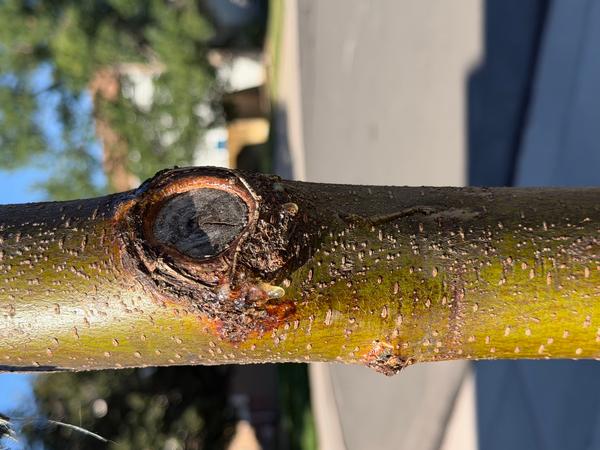
Unfortunately, Honeylocust harbor an arch-nemesis…the fungal infection Thyronectria. Thyronectria is an airborne fungus that enters the enters the Honeylocust (and sometimes Coffeetree) trees through wounds or cracks in the bark. It can also spread from tree to tree through interconnected root systems. Once infected, the fungus feeds on the tissue of the trees leaving soft spots, or cankers, that weaken the trees and disrupt the flow of water and nutrients through the vascular system of the trees’ trunks and branches. Drought stricken, nutrient deficient, stressed, or otherwise unhealthy trees are unable to fend off the disease. Without intervention and proper care, the fungus slowly consumes the tree until it eventually dies.
Fortunately, healthy Honeylocust are quite adept at combating the fungus and have the ability to resist and recover from minor infections. Just as humans have an immune system, trees also respond to interloper organisms by initiating chemical and hormonal defenses. The sap you may see oozing from open infections is actually the tree attempting to flush the fungus from it’s tissue.
Ryan Bartlett, a colleague and lead instructor for the Arborist Apprenticeship Program at Front Range Community College and owner of Sanctuary Tree PHC, likens Thyronectria to the common cold. He says “it’s ever-present…just don’t let it turn into pneumonia. If the tree looks vital (good canopy, good water, etc…), then it’s just a runny nose and will get better.” Healthy people who exercise regularly and have a good diet rarely become ill, or if they do, they experience only minor symptoms and recover quickly. The elderly, malnourished, or those with compromised immunity may fare far worse to even minor infections, and sadly for those individuals common maladies may even lead to death.
Trees are no different. Robust trees that are well fed and that receive ample water are well equipped to resist even major intrusions of foreign microbes. Trees that lack nutrients, or that are heat or drought stressed are unable to mount an ample defense and are likely to succumb to the disease.
So, should we exclude Honeylocust from our quiver of tree choices? Certainly not! Given that Colorado’s harsh climate and extreme weather variables eliminate so many trees from consideration, Honeylocust are an important addition to our urban forests contributing to our biodiversity. Most trees and plants have a correlating pest or disease associated with them. Knowing this, it’s important to proactively take measures to protect and properly care for your trees.
The advice I’d offer for the care and maintenance of Honeylocust is the same I advise for every Happy tree. Water properly and fertilize regularly. Proper watering means soak the tree when you water, but give it a few days to drain and somewhat dry out between waterings. Happy Trees fertilizes every tree we plant with Green9. Green9 reads like a bottle of Centrum. It’s predominantly iron, but also provides the micro-nutrients magnesium, sodium, zink, boron, molybdenum, copper, and manganese that trees need for a healthy metabolism and immune system support. Fertilizing regularly with Green9 (March, June, and late August), fortifies trees by providing necessary nutrients.
Key to Life, the local Broomfield company that produces Green9, also offers Root Life, a concoction of live beneficial bacteria. It may sound a little gross, but we’ve learned that beneficial microbes form a symbiotic relationship with the trees and assist with water and nutrient uptake. Front Range soils consist mostly of billions of years’ dust blown off the Continental Divide, and are most often devoid of microorganisms. Inoculate the soil around your trees occasionally to enhance microbial activity in your soil, and your trees (and all your garden plants) will benefit greatly.
Visit any undeveloped open space east of the Hogback and you’ll notice that trees don’t naturally grow here. Many trees can thrive here, but only with human assistance with ample irrigation and proper fertilization. If you have crummy soil and can’t commit to caring for your trees, then Honeylocust are probably a poor choice. With a little TLC, Honeylocust trees can provide your family and community with shade, habitat, and beauty for generations to come!
Unfortunately, Honeylocust harbor an arch-nemesis…the fungal infection Thyronectria. Thyronectria is an airborne fungus that enters the enters the Honeylocust (and sometimes Coffeetree) trees through wounds or cracks in the bark. It can also spread from tree to tree through interconnected root systems. Once infected, the fungus feeds on the tissue of the trees leaving soft spots, or cankers, that weaken the trees and disrupt the flow of water and nutrients through the vascular system of the trees’ trunks and branches. Drought stricken, nutrient deficient, stressed, or otherwise unhealthy trees are unable to fend off the disease. Without intervention and proper care, the fungus slowly consumes the tree until it eventually dies.
Fortunately, healthy Honeylocust are quite adept at combating the fungus and have the ability to resist and recover from minor infections. Just as humans have an immune system, trees also respond to interloper organisms by initiating chemical and hormonal defenses. The sap you may see oozing from open infections is actually the tree attempting to flush the fungus from it’s tissue.
Ryan Bartlett, a colleague and lead instructor for the Arborist Apprenticeship Program at Front Range Community College and owner of Sanctuary Tree PHC, likens Thyronectria to the common cold. He says “it’s ever-present…just don’t let it turn into pneumonia. If the tree looks vital (good canopy, good water, etc…), then it’s just a runny nose and will get better.” Healthy people who exercise regularly and have a good diet rarely become ill, or if they do, they experience only minor symptoms and recover quickly. The elderly, malnourished, or those with compromised immunity may fare far worse to even minor infections, and sadly for those individuals common maladies may even lead to death.
Trees are no different. Robust trees that are well fed and that receive ample water are well equipped to resist even major intrusions of foreign microbes. Trees that lack nutrients, or that are heat or drought stressed are unable to mount an ample defense and are likely to succumb to the disease.
So, should we exclude Honeylocust from our quiver of tree choices? Certainly not! Given that Colorado’s harsh climate and extreme weather variables eliminate so many trees from consideration, Honeylocust are an important addition to our urban forests contributing to our biodiversity. Most trees and plants have a correlating pest or disease associated with them. Knowing this, it’s important to proactively take measures to protect and properly care for your trees.
The advice I’d offer for the care and maintenance of Honeylocust is the same I advise for every Happy tree. Water properly and fertilize regularly. Proper watering means soak the tree when you water, but give it a few days to drain and somewhat dry out between waterings. Happy Trees fertilizes every tree we plant with Green9. Green9 reads like a bottle of Centrum. It’s predominantly iron, but also provides the micro-nutrients magnesium, sodium, zink, boron, molybdenum, copper, and manganese that trees need for a healthy metabolism and immune system support. Fertilizing regularly with Green9 (March, June, and late August), fortifies trees by providing necessary nutrients.
Key to Life, the local Broomfield company that produces Green9, also offers Root Life, a concoction of live beneficial bacteria. It may sound a little gross, but we’ve learned that beneficial microbes form a symbiotic relationship with the trees and assist with water and nutrient uptake. Front Range soils consist mostly of billions of years’ dust blown off the Continental Divide, and are most often devoid of microorganisms. Inoculate the soil around your trees occasionally to enhance microbial activity in your soil, and your trees (and all your garden plants) will benefit greatly.
Visit any undeveloped open space east of the Hogback and you’ll notice that trees don’t naturally grow here. Many trees can thrive here, but only with human assistance with ample irrigation and proper fertilization. If you have crummy soil and can’t commit to caring for your trees, then Honeylocust are probably a poor choice. With a little TLC, Honeylocust trees can provide your family and community with shade, habitat, and beauty for generations to come!