
Search Products

2026 drought causes tree doubt
Plant trees to beat the heat! No restrictions!
By Chris Leinster - April 2, 2026
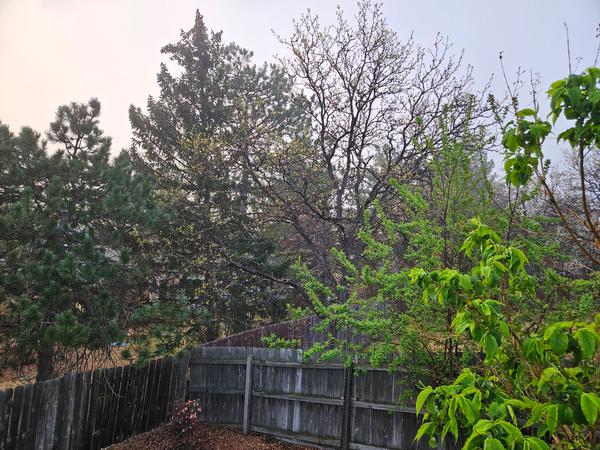
Every Colorado skier knows the winter of 2025/26 was sadly one of the worst on record in terms of low snowfall amounts and warm dry conditions across the Front Range and the Continental Divide. Low snowpack means less than full reservoirs and tightening water reserves to supply communities across greater Denver metro area. Local municipalities and water managers are anticipating drought conditions, and are considering or implementing outdoor watering restrictions for the coming summer season.
Many homeowners and potential clients are under the impression that these conditions might prevent them from new tree planting and are delaying or cancelling plans to plant trees this year. The situation in reality is not so dire. The outdoor watering restrictions being considered or mandated in most communities simply follow common sense water conservation practices, and are intended to eliminate wasteful watering practices.
For the most part, the regulations simply mandate or impose watering practices that otherwise ought to be practiced, even in water abundant years. This means operating irrigation systems efficiently, directing sprinkler heads off paved surfaces, and avoiding runoff to sidewalks and streets. Homeowners are directed to water only in the early morning or evening hours when the air is cooler to eliminate evaporation in the heat of the day. This regulation is always in effect, but may be more strictly enforced during this water stressed year. Additionally, residences may be assigned specific watering days to better manage system capacity.
Bluegrass lawns can thrive under most conditions with efficient watering only three times per week. Most communities restrict watering to three days per week regardless of drought conditions. The strictest regulations under consideration that I could find are certain municipalities limiting lawn watering to only two days per week. Most jurisdictions are encouraging delaying firing up irrigation systems until May to allow reservoirs fill up to satisfy higher demand during summer months.
So, is now a good time to plant new trees, and will new tree planting even be allowed? Great news, there are no current restrictions prohibiting the planting of new trees, nor are any under consideration! As always, newly planted trees should be watered efficiently no more than three times per week. Give them a good soaking when you water, but do not water again until the soil drains and somewhat dries out.
How can you know when your tree needs water? Happy Trees installs a water gage, a simple pipe that extends to the bottom of the planting hole. Probing with a bamboo dipstick allows you to see if water is reaching the bottom of the hole, if water is sitting in the basin, or if the soil is drying out and in need of water. This Happy Trees exclusive gives you control and ensures that you provide only the water needed to help your tree thrive.
The last thing I want to do is stir up an argument over climate change, but if climate change is to blame, trees are the answer! Trees soak up the energy of the sun, converting the sun’s energy into sugars that feed the tree. They cool the ground and shade the lawn, reducing the water needed to keep the grass green. They shade paved surfaces which reflect heat back to the atmosphere. They shade houses and block sunlight from windows, reducing the energy needed to cool houses and lowering utility bills! They house and feed wildlife which may be struggling in drought-stressed seasons. Trees pump oxygen into the air to restore a balance of atmospheric gases. And they gobble up carbon, storing it in woody tissue and returning it to the soil.
If you and your family are considering planting a new tree or trees this year, there is no reason to hesitate. Every year you delay is a year’s growth lost that otherwise could be providing you shade, privacy, or just something pretty to enjoy. Planting trees this season is not only allowed, it’s the right thing to do! Call Happy Trees today and let’s beat the heat together!
Read More...
Many homeowners and potential clients are under the impression that these conditions might prevent them from new tree planting and are delaying or cancelling plans to plant trees this year. The situation in reality is not so dire. The outdoor watering restrictions being considered or mandated in most communities simply follow common sense water conservation practices, and are intended to eliminate wasteful watering practices.
For the most part, the regulations simply mandate or impose watering practices that otherwise ought to be practiced, even in water abundant years. This means operating irrigation systems efficiently, directing sprinkler heads off paved surfaces, and avoiding runoff to sidewalks and streets. Homeowners are directed to water only in the early morning or evening hours when the air is cooler to eliminate evaporation in the heat of the day. This regulation is always in effect, but may be more strictly enforced during this water stressed year. Additionally, residences may be assigned specific watering days to better manage system capacity.
Bluegrass lawns can thrive under most conditions with efficient watering only three times per week. Most communities restrict watering to three days per week regardless of drought conditions. The strictest regulations under consideration that I could find are certain municipalities limiting lawn watering to only two days per week. Most jurisdictions are encouraging delaying firing up irrigation systems until May to allow reservoirs fill up to satisfy higher demand during summer months.
So, is now a good time to plant new trees, and will new tree planting even be allowed? Great news, there are no current restrictions prohibiting the planting of new trees, nor are any under consideration! As always, newly planted trees should be watered efficiently no more than three times per week. Give them a good soaking when you water, but do not water again until the soil drains and somewhat dries out.
How can you know when your tree needs water? Happy Trees installs a water gage, a simple pipe that extends to the bottom of the planting hole. Probing with a bamboo dipstick allows you to see if water is reaching the bottom of the hole, if water is sitting in the basin, or if the soil is drying out and in need of water. This Happy Trees exclusive gives you control and ensures that you provide only the water needed to help your tree thrive.
The last thing I want to do is stir up an argument over climate change, but if climate change is to blame, trees are the answer! Trees soak up the energy of the sun, converting the sun’s energy into sugars that feed the tree. They cool the ground and shade the lawn, reducing the water needed to keep the grass green. They shade paved surfaces which reflect heat back to the atmosphere. They shade houses and block sunlight from windows, reducing the energy needed to cool houses and lowering utility bills! They house and feed wildlife which may be struggling in drought-stressed seasons. Trees pump oxygen into the air to restore a balance of atmospheric gases. And they gobble up carbon, storing it in woody tissue and returning it to the soil.
If you and your family are considering planting a new tree or trees this year, there is no reason to hesitate. Every year you delay is a year’s growth lost that otherwise could be providing you shade, privacy, or just something pretty to enjoy. Planting trees this season is not only allowed, it’s the right thing to do! Call Happy Trees today and let’s beat the heat together!
Much needed moisture returns!
Warming trend ahead...
By Chris Leinster - March 7, 2026

The winter of 2026 will go down as one of the driest and warmest on record. Friday, March 6th, winter finally showed up. Just as the Crabapple trees and Lilac shrubs were starting to bloom, temperatures plunged and a heavy wet snow arrived! Fret not, this is excellent timing and actually beneficial for Colorado’s lawns and gardens.
While the Front Range saw temperatures dip below freezing, it didn’t get cold enough for the chill to do any harm. Most early blooming trees and shrubs, and especially flowering bulbs like Crocus and Daffodil, are well equipped to withstand minor polar plunges and will simply shake off the snow with a smile. The added moisture will surely benefit the grass and trees at the critical time of awakening from dormancy. Tree roots actually begin to stretch before you notice any top growth, which is why winter watering is so desperately important. I’ve been watering about every other week it seems like since new year’s, just to keep some moisture in the ground.
The warm temperatures allowed the Spring digging season to begin ahead of schedule, so farm dug trees are now arriving daily and we are planting! My vendors received many varieties of Maple, Oak, Linden, Honeylocust, and Elm over the past few weeks. Early flowering trees like Crabapple, Serviceberry, Pear, Canada Red Cherry, and Redbud are now on our lots. If you act quickly, we can get them planted before they blossom so you can enjoy the cacophony of flowers this year! Planting early also means the trees “wake up” from their winter slumber and begin establishing roots in your yard immediately upon installation.
Evergreen trees like Pine, Spruce, and Juniper generally arrive a bit later in the season, but I have a great selection of Pine and Spruce in 6 and 8’ sizes already. If you need Juniper or specialty evergreens like Norway Spruce, Arnold Sentinel Pine, or Bosnian Pine, let us know what you want and I’ll notify you as soon as they drop and I’ll send pictures for your approval.
Vail received a foot of fresh powder over the past week, so I’m not quite ready to hang up the skis just yet. But business comes first! If you’re thinking trees this Spring this is the moment to act, so give Happy Trees a call today!
Read More...
While the Front Range saw temperatures dip below freezing, it didn’t get cold enough for the chill to do any harm. Most early blooming trees and shrubs, and especially flowering bulbs like Crocus and Daffodil, are well equipped to withstand minor polar plunges and will simply shake off the snow with a smile. The added moisture will surely benefit the grass and trees at the critical time of awakening from dormancy. Tree roots actually begin to stretch before you notice any top growth, which is why winter watering is so desperately important. I’ve been watering about every other week it seems like since new year’s, just to keep some moisture in the ground.
The warm temperatures allowed the Spring digging season to begin ahead of schedule, so farm dug trees are now arriving daily and we are planting! My vendors received many varieties of Maple, Oak, Linden, Honeylocust, and Elm over the past few weeks. Early flowering trees like Crabapple, Serviceberry, Pear, Canada Red Cherry, and Redbud are now on our lots. If you act quickly, we can get them planted before they blossom so you can enjoy the cacophony of flowers this year! Planting early also means the trees “wake up” from their winter slumber and begin establishing roots in your yard immediately upon installation.
Evergreen trees like Pine, Spruce, and Juniper generally arrive a bit later in the season, but I have a great selection of Pine and Spruce in 6 and 8’ sizes already. If you need Juniper or specialty evergreens like Norway Spruce, Arnold Sentinel Pine, or Bosnian Pine, let us know what you want and I’ll notify you as soon as they drop and I’ll send pictures for your approval.
Vail received a foot of fresh powder over the past week, so I’m not quite ready to hang up the skis just yet. But business comes first! If you’re thinking trees this Spring this is the moment to act, so give Happy Trees a call today!
ProGreen 2026
Planting season has arrived at last!
By Chris Leinster - February 6, 2026

The 2026 ProGreen Expo has concluded, and this means that the planting season for the new year is officially underway! ProGreen is the premier regional green industry trade show at the Colorado Convention Center. Businesses that serve all aspects of the landscape industry showcase vehicles and equipment, chemicals and fertilizers, soil and stone products, technology and business services, and of course, trees and all sorts of plant material. ProGreen offers a great way for leaders in the landscape industry to reconnect after the winter break, keep up to date with new products and best practices, and most importantly for Happy Trees, to receive updated catalogs and pricing from all our local vendors.
I am vigorously updating our tree library online and loading prices for 2026 on our website. So far, we’re seeing only modest price increases from last year. This is a welcome reprieve, as a national tree shortage and skyrocketing labor and fuel prices have led to jarring increases over the past couple of years. This is great news, and seems to be relevant across most suppliers and vendors. I am evaluating to make sure Happy Trees is offering the highest value in tree planting services at a competitive price.
The most prevalent topic on everyone’s mind is naturally the weather. It has been an extraordinarily warm and historically dry winter across the Front Range. Local growers are considering harvesting trees several weeks earlier than usual. Happy Trees may have new stock and fresh material for those wanting to get a jump on the planting season! Others prognosticate winter’s late arrival, meaning wet weather may delay spring planting once winter finally decides to show up. Happy Trees will be nimble and ready to respond to whatever the weather throws at us!
Meanwhile, homeowners should be dragging out the hoses and giving everything a good drink. Daytime temperatures are in the 60’s and will be for the next few days. Dry ground is stressful on plants, and can actually suck the water out of tree and shrub roots! Turn your hose down to a trickle and set it at the base of newly planted trees for 5-10 minutes, or use a broadcast type sprinkler like a “Frog Eye” to water a wider area for 15-30 minutes for more established trees. Your lawn could use a drink too. Although most plants are technically dormant, everything will benefit from some moisture in the soil.
Hopefully I’ll get a few more ski days in before the phones start ringing off the hook. If you’re looking to have trees installed this spring go ahead and give us a call and we’ll get you to the front of the queue.
Read More...
I am vigorously updating our tree library online and loading prices for 2026 on our website. So far, we’re seeing only modest price increases from last year. This is a welcome reprieve, as a national tree shortage and skyrocketing labor and fuel prices have led to jarring increases over the past couple of years. This is great news, and seems to be relevant across most suppliers and vendors. I am evaluating to make sure Happy Trees is offering the highest value in tree planting services at a competitive price.
The most prevalent topic on everyone’s mind is naturally the weather. It has been an extraordinarily warm and historically dry winter across the Front Range. Local growers are considering harvesting trees several weeks earlier than usual. Happy Trees may have new stock and fresh material for those wanting to get a jump on the planting season! Others prognosticate winter’s late arrival, meaning wet weather may delay spring planting once winter finally decides to show up. Happy Trees will be nimble and ready to respond to whatever the weather throws at us!
Meanwhile, homeowners should be dragging out the hoses and giving everything a good drink. Daytime temperatures are in the 60’s and will be for the next few days. Dry ground is stressful on plants, and can actually suck the water out of tree and shrub roots! Turn your hose down to a trickle and set it at the base of newly planted trees for 5-10 minutes, or use a broadcast type sprinkler like a “Frog Eye” to water a wider area for 15-30 minutes for more established trees. Your lawn could use a drink too. Although most plants are technically dormant, everything will benefit from some moisture in the soil.
Hopefully I’ll get a few more ski days in before the phones start ringing off the hook. If you’re looking to have trees installed this spring go ahead and give us a call and we’ll get you to the front of the queue.
We're in the sweet spot!
Schedule your fall planting today!
By Chris Leinster - September 23, 2025
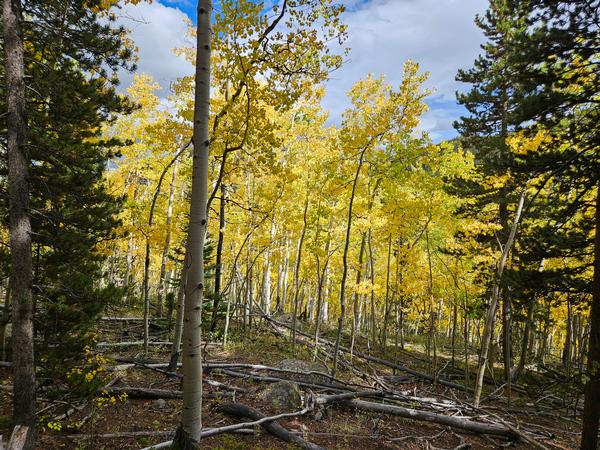
It was a brutally hot summer with wildfire smoke blanketing the Front Range for much of July and August. While Happy Trees planted nearly every day with extraordinary success, cooler temperatures and natural precipitation provide better conditions for planting trees. If you were waiting for Fall to get trees in the ground, Fall has arrived and now is a great time to plant!
Trees can only be successfully harvested while the trees are dormant, usually in February and March, and again in September, October, and November. Every tree that was sold over the summer months was dug in late winter/ early spring. True, supplies for many trees are somewhat or totally depleted by this time of year, but most wholesalers anticipate this and order quantities of the most popular trees sufficient to meet fall demand.
If you’re looking for Maple, Autumn Blaze remains one of the best sellers around the region. While Autumn Blaze is a perfectly acceptable tree for Colorado, they are exhibiting summer stress from sitting in the nursery through the heat of summer. This manifests by turning early fall color, and sun-scorched leaf margins. The trees will recover beautifully if planted in your yard, but more resilient varieties of maple with very similar characteristics are coming online in recent years. It should be noted that Autumn Blaze is the only variety that is seedless, so I still recommend them if this is important to you.
Consider Redpointe Maple, virtually the same as Autumn Blaze, but with a more uniform branch structure, a dominant central leader, and better adapted to deal with our drought and alkaline soil. While I do observe some summer stress, they are faring much better than their AB cousins at the end of the season. Also noteworthy, Fall Fiesta Maple is a magnificent choice for our harsh environment. Still a quick maturing overstory shade tree, Fall Fiesta exhibits a diverse display of Red-Orange-Yellow fall foliage. If you need a more bomb proof plant for exposed sites or urban areas, State Street Maple is tough to beat. These are stout trees that are quite adaptable to our alkaline soils, they withstand our dramatic temperature swings, and are resistant to frost cracking. These stalwart trees are showing no signs of summer distress and are among the best looking trees in the nursery at this time. Brilliant Gold fall color, a great addition to any yard.
If you don’t mind acorns, I’ve still got plenty of Oak from which to choose. Northern Red, Shumard, and Texas Red are abundant in both 2” and 2-1/2” caliper sizes. If the beans don’t bother you, I’ve got some of the best Western Catalpa I’ve ever seen on the lot! One of my vendors has Redmond Linden newly arrived in 2-1/2” that I could probably sell as 3”, an exceptional value! Skyline Honeylocust are plentiful in all sizes, one of our cleaner trees for shading decks and patios.
Fall harvested trees are beginning to arrive from our northern states and Canada. Spruce, Austrian Pine, and Pinion Pine are now arriving daily. The pickings were getting pretty slim on these popular evergreens, but if you act now you’ll get the pick of the litter!
It’s been another sensational year for Happy Trees, with hundreds of newly planted trees now gracing the homes and yards of Coloradoans! If you’re considering a fall planting, it’s time to pick up the phone. Remember, it may take a few weeks for HOA approval if necessary, and a week for utility locates. We generally plant straight through October, although last year temperatures remained favorable for the better part of November which extended our planting season. The cover photo was taken 9/30 in the Mt. Evans wilderness. Aspen are displaying peak fall color, so hurry up and get scheduled today!
Read More...
Trees can only be successfully harvested while the trees are dormant, usually in February and March, and again in September, October, and November. Every tree that was sold over the summer months was dug in late winter/ early spring. True, supplies for many trees are somewhat or totally depleted by this time of year, but most wholesalers anticipate this and order quantities of the most popular trees sufficient to meet fall demand.
If you’re looking for Maple, Autumn Blaze remains one of the best sellers around the region. While Autumn Blaze is a perfectly acceptable tree for Colorado, they are exhibiting summer stress from sitting in the nursery through the heat of summer. This manifests by turning early fall color, and sun-scorched leaf margins. The trees will recover beautifully if planted in your yard, but more resilient varieties of maple with very similar characteristics are coming online in recent years. It should be noted that Autumn Blaze is the only variety that is seedless, so I still recommend them if this is important to you.
Consider Redpointe Maple, virtually the same as Autumn Blaze, but with a more uniform branch structure, a dominant central leader, and better adapted to deal with our drought and alkaline soil. While I do observe some summer stress, they are faring much better than their AB cousins at the end of the season. Also noteworthy, Fall Fiesta Maple is a magnificent choice for our harsh environment. Still a quick maturing overstory shade tree, Fall Fiesta exhibits a diverse display of Red-Orange-Yellow fall foliage. If you need a more bomb proof plant for exposed sites or urban areas, State Street Maple is tough to beat. These are stout trees that are quite adaptable to our alkaline soils, they withstand our dramatic temperature swings, and are resistant to frost cracking. These stalwart trees are showing no signs of summer distress and are among the best looking trees in the nursery at this time. Brilliant Gold fall color, a great addition to any yard.
If you don’t mind acorns, I’ve still got plenty of Oak from which to choose. Northern Red, Shumard, and Texas Red are abundant in both 2” and 2-1/2” caliper sizes. If the beans don’t bother you, I’ve got some of the best Western Catalpa I’ve ever seen on the lot! One of my vendors has Redmond Linden newly arrived in 2-1/2” that I could probably sell as 3”, an exceptional value! Skyline Honeylocust are plentiful in all sizes, one of our cleaner trees for shading decks and patios.
Fall harvested trees are beginning to arrive from our northern states and Canada. Spruce, Austrian Pine, and Pinion Pine are now arriving daily. The pickings were getting pretty slim on these popular evergreens, but if you act now you’ll get the pick of the litter!
It’s been another sensational year for Happy Trees, with hundreds of newly planted trees now gracing the homes and yards of Coloradoans! If you’re considering a fall planting, it’s time to pick up the phone. Remember, it may take a few weeks for HOA approval if necessary, and a week for utility locates. We generally plant straight through October, although last year temperatures remained favorable for the better part of November which extended our planting season. The cover photo was taken 9/30 in the Mt. Evans wilderness. Aspen are displaying peak fall color, so hurry up and get scheduled today!
Genetic Regression
What is going on with this unusual shrub?
By Chris Leinster - September 10, 2025
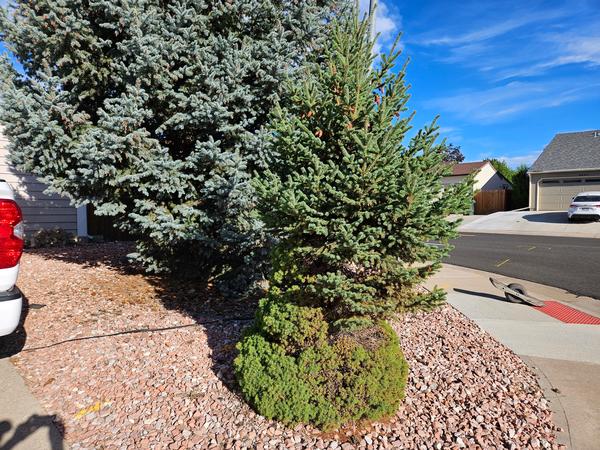
The accompanying photo perfectly demonstrates an example of Genetic Regression. Genetic Regression occurs when a genetic mutation of a hybridized plant “regresses” back to it’s ancestral form. In this instance, a Dwarf Alberta Spruce, which itself is a genetic mutation of a White Spruce, regressed back to its original form!
All Dwarf Alberta Spruce are clones of mutated branches, often called “witches brooms”, originally found growing in an isolated stand of White Spruce in Alberta, Canada. Botanists took cuttings of the mutated branches, grafted them to a common Spruce root stock, and propagated the miniature, slow-growing, conical ornamental shrubs we now enjoy as Dwarf Alberta Spruce.
For reasons that are not fully understood, and reasons that are irrelevant for this discussion, select cells at the top of this shrub reverted back to the parent White Spruce heritage. While this looks kind of cool, it is usually undesirable. The White Spruce is growing much faster and larger than intended by the design requirements and will continue to do so until it overtakes and eventually kills the host Dwarf Spruce.
Genetic Regression is quite common in many types of variegated plants, plants hybridized and selected for variable or striated colors in the leaves. For example, Emerald Gaiety and Emerald ‘n Gold Euonymus have been selected because they have white and gold margins around a green leaf. Often times, a branch or several branches will regress, displaying only green leaves, usually with more aggressive growth. Ivory Halo Dogwood, Tricolor Beech, and Purple Smoketree are susceptible to regression as well.
The remedy is quite simple. Simply prune or trim off the affected branches as soon as the anomaly is detected. Easy! The sooner the better, as the abnormality can swiftly take over and wreck the integrity of the desired traits of the plant, as the cover photo can attest.
Read More...
All Dwarf Alberta Spruce are clones of mutated branches, often called “witches brooms”, originally found growing in an isolated stand of White Spruce in Alberta, Canada. Botanists took cuttings of the mutated branches, grafted them to a common Spruce root stock, and propagated the miniature, slow-growing, conical ornamental shrubs we now enjoy as Dwarf Alberta Spruce.
For reasons that are not fully understood, and reasons that are irrelevant for this discussion, select cells at the top of this shrub reverted back to the parent White Spruce heritage. While this looks kind of cool, it is usually undesirable. The White Spruce is growing much faster and larger than intended by the design requirements and will continue to do so until it overtakes and eventually kills the host Dwarf Spruce.
Genetic Regression is quite common in many types of variegated plants, plants hybridized and selected for variable or striated colors in the leaves. For example, Emerald Gaiety and Emerald ‘n Gold Euonymus have been selected because they have white and gold margins around a green leaf. Often times, a branch or several branches will regress, displaying only green leaves, usually with more aggressive growth. Ivory Halo Dogwood, Tricolor Beech, and Purple Smoketree are susceptible to regression as well.
The remedy is quite simple. Simply prune or trim off the affected branches as soon as the anomaly is detected. Easy! The sooner the better, as the abnormality can swiftly take over and wreck the integrity of the desired traits of the plant, as the cover photo can attest.
Categories